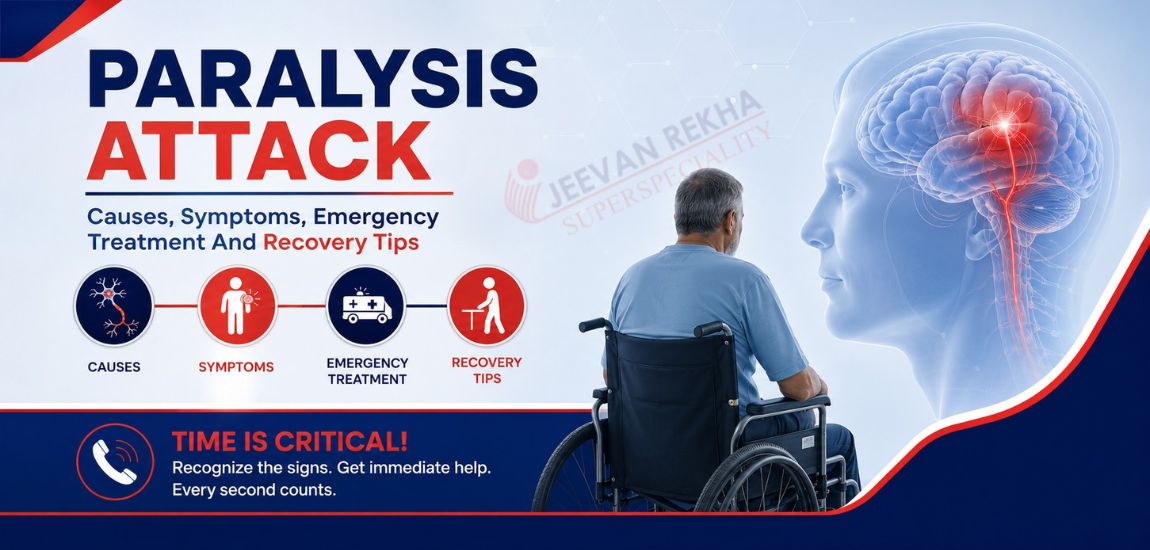
The paralysis attack is a serious medical condition that can occur in a person abruptly and affect his/her ability to move, speak, or control other body parts. The paralysis attack may be due to a stroke, nerve injury, or some other neurological disorders. Early medical treatment is very important in recovery and prevention of full disability.
Paralysis attack means that there is sudden loss of muscle function in one/multiple parts of the body. Depending on the cause of this phenomenon, it can affect one side of the body, both legs, one limb, body muscles responsible for breathing and speaking.
Paralysis occurs due to impaired communication between the brain, spinal cord, and muscles. It can result from insufficient blood supply, bleeding in the brain and cord injury, damaged nervous system, or neurological diseases treated in the Neurology Department.
Understanding the causes of paralysis attacks allows identifying those who are more at risk of experiencing them.
1. Stroke (The Most Common Cause)
Stroke occurs when the blood supply to the brain is disrupted or when a blood vessel bursts. Due to this, the brain tissues die and cause paralysis.
2. Brain Injury
Severe injuries of the head due to a car accident, fall, or trauma can affect the areas of the brain responsible for movement.
3. Spinal Cord Injury
Injuries to the spinal cord interfere with the message transitions from the brain to the muscles, hence causing paralysis below the place of the injury.
4. Bell's Palsy
This condition results in temporary paralysis of the facial muscles due to inflammation of the facial nerve.
5. Nervous System Disorders
Some problems with the nervous system can also be the cause of paralysis attacks such as:
6. Infections
Infections attacking the brain or spinal cord, like meningitis, encephalitis, or polio can be causes of paralysis attacks as well.
7. Tumors
Tumors occurring in the brain or spinal cord can squeeze the nerve endings or the brain tissue thus leading to paralysis.
Many factors contribute to the likelihood of a paralysis attack such as:
- High blood pressure
- Diabetes
- High cholesterol
- Smoking
- Obesity
- Heart disease
- Excessive drinking
- A family history of strokes
You can read also:- Leg Cramps at Night: Causes, Symptoms, Relief and Prevention Tips
Seeing the signs of a paralysis attack early on may lead to prompt treatment.
Common signs are:
- Weakness in the arms, legs, and face
- Loss of sensation on one side of the body
- Trouble speaking or understanding speech
- Drooping of one side of the face
- Loss of balance
- Trouble walking
- Blurred or double vision
- Severe headache that is unexplained
- Confusion
- Difficulty swallowing
The FAST method is one of the simplest ways of recognizing signs of a paralysis attack.
F - Face: Does the person smile? Does the affected side droop?
A - Arms: Can the person raise both arms? Does one of their arms drift downwards?
S - Speech: Is their speech clear or slurred?
T - Time: Call 911 immediately.
Treatment of a paralysis attack can help prevent serious brain injury and facilitate recovery.
1. Call Emergency Services Right Away
Get to the nearest emergency room as soon as possible. Every second is crucial during a stroke.
2. Protect The Individual
If the individual is unconscious, place him in a comfortable position.
3. Avoid Giving Food Or Drinks
Swallowing problems are common during paralysis episodes, which puts the individual at great risk of choking.
4. Mark The Time The Symptoms Began
It is critical for the medical professionals to know exactly when the symptoms began because certain stroke therapies are only effective within a particular timeframe.
5. Hospital Treatment May Include
The treatment received at the hospital will depend on the nature of the stroke and may include:
You can read also:- Atypical Chest Pain: Causes, Symptoms, Diagnosis and Treatment Guide
The percentages of recovery will depend on each patient's situation, including the reasons for the disability, its severity, age, and the time when medical assistance was received.
Therapy helps with:
Occupational therapy
Occupational therapists assist patients in getting their independence back in everyday life activities such as getting dressed, eating, and bathing.
Speech Therapy
Speech therapy is designed for patients who also encounter problems with speech and swallowing due to paralysis.
Some medications can also help patients:
Avoid future strokes
Healthy living
Recovery from paralysis is also largely based on a healthy lifestyle:
Emotional support
It is not uncommon for people suffering from paralysis to experience emotional problems, and such matters should be handled with the help and support of others.
It is not possible to prevent every attack of paralysis, however steps that can be taken in order to decrease its chances include:
In case of paralysis attack treatment of this condition should be undertaken as soon as possible. It is crucial to detect the symptoms of paralysis and get to the hospital without delay. At Jeevan Rekha Hospital, Timely treatment of paralysis provides a good chance of recovery from the condition regardless whether they were caused by stroke, nerve damage, or any other neurological disease, as emergence of paralysis will require medical assistance.
1. What are the signs of a stroke in its early stages?
Ans. Some of the early signs of a stroke include sudden weakness or numbness on one side of the body, drooping of one side of the face, slurred speech, difficulty walking, visual troubles, losing balance, feeling confused, and experiencing severe headache.
2. What to do immediately in case of a stroke?
Ans. You should call for emergency services, pay attention to when the attack started, help keep the person comfortable, not feed or give them water, and take them to the nearest medical care facility.
3. What are the major causes of a stroke?
Ans. Conditions that may lead to a stroke include stroke, brain injuries, spinal injury, infections, neurological disorders as well as brain or spinal tumors.
4. Is it possible for someone to recover from paralysis?
Ans. Yes, many people recover from paralysis if they receive treatment, rehabilitation therapy, speech therapy, and occupational therapy. Recovery depends on the cause and severity of the condition.
5. Who is the Doctor for Paralysis Treatment?
Ans. For diagnosing and treatment of paralysis caused by diseases of brain and spinal cord experts, the ideal expert is a neurologist. Depending on the condition of the patient, one may also need the services of physiotherapists, neurosurgeons, or rehabilitation therapists.


Jeevan Rekha Critical Care and Trauma Hospital, a unit of DR M. N. Tandon Memorial Charitable Trust is located in Jagatpura, Jaipur. The development of the institute reflects our commitment to filling the large gap that exists between demand and availability of Emergency and Critical Care Services in Rajasthan state in general and Jaipur in particular. Through continuous training and research, we aim to make difference to the outcome in these critically sick patients.
⚠️ Disclaimer: The information on the Web Site is provided for informational purposes only and is not meant to substitute the advice provided by our doctor or other health care professional. You should not use the information available on or through the Web Site for treating a health problem or disease or prescribing any medication. All images used on this website are for illustrative purposes only,
2026 © All Rights Reserved.