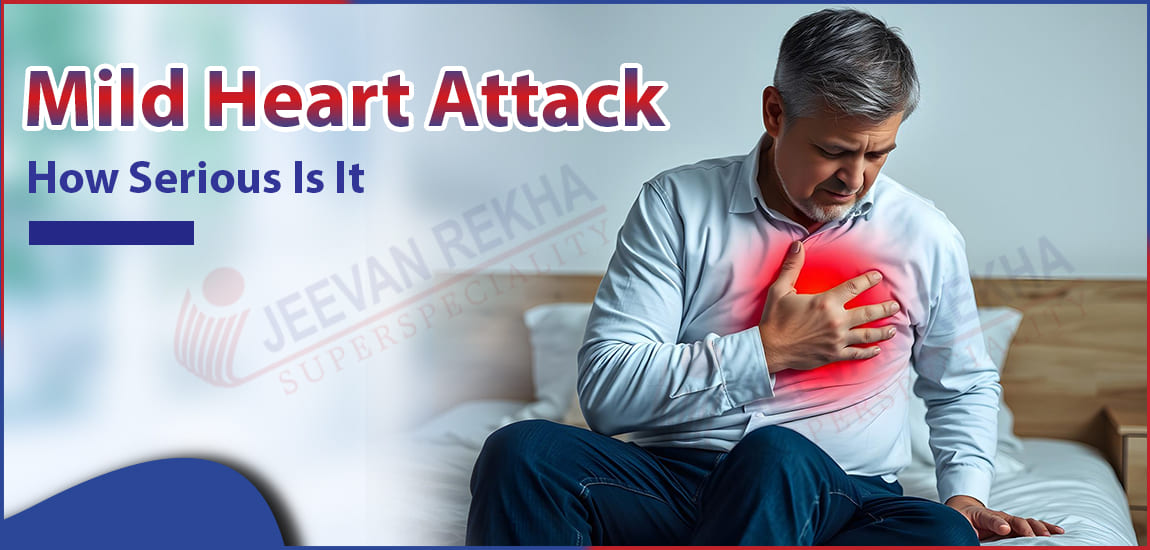
When you hear the term “mild heart attack,” many people think it’s not dangerous. But is that true?. A mild heart attack is also known as a minor myocardial infarction. It can cause heart damage if treatment is not received in a timely manner. Therefore, knowing the signs and symptoms of a mild heart attack, the causes, and treatment options are imperative to saving someone's life.
A milder heart attack occurs when blood flow to a portion of the heart muscle is damaged due to a partial blockage. The blockage is not complete, thus the amount of heart muscle that has been damaged will be smaller than with a major heart attack.
Don’t let the word “mild” mislead you into thinking it will not cause harm to your heart. The medical profession refers to a mild heart attack as NSTEMI or Non-ST-Elevation Myocardial Infarction (NSTEMI). As the symptoms of a mild heart attack may not be as out of the ordinary as those that accompany a major heart attack, the heart muscle is still deprived of oxygen and the heart will suffer.
It is essential to recognize signs of a mild heart attack. The following are common indicators of a mild heart attack:
Symptoms in certain people (particularly older women) are often considerably less apparent than in other groups (e.g., difficulty maintaining balance, feeling of unsteady), therefore early identification is critical!
Seek out help after experiencing chest discomfort lasting greater than 10-15 minutes; regardless of whether you think the discomfort is minor.
You can read also:- Is Coconut Water Safe During Pregnancy? Benefits, Risks & Myths
Mild heart attacks can cause lasting damage to the heart's tissue, raise the chances of experiencing another more serious heart attack or developing associated complications, such as an irregular heart beat; and may increase your likelihood of being diagnosed with heart failure many years down the road.
The studies show that individuals who fail to pay attention to their early symptoms of a mild heart attack have a higher frequency of suffering a major cardiac event in the future.
Awareness of the various causes responsible for heart attacks may allow for prevention. The following are some common causes:
While the arteries may not be completely blocked, they may be partially blocked or narrowed enough to limit blood flow which results in some degree of damage to the cardiovascular system (heart muscle).
You can read also:- Skin Ulcers Uncovered: Causes, Types, Symptoms, and Healing Options
Early treatment helps limit injury and reduce mortality after a heart attack and immediate consultation with the Cardiology Department is essential for proper diagnosis and management;
A primary goal of treatment for a mild heart attack is the restoration of blood flow quickly and preventing additional damage.
Individuals who undergo surgical intervention will experience varied rates of recovery; however, an average timeline is issued above for general reference and use; average stay in the hospital equals between two and five (2 - 5) days; reimplementation of light activity from day of discharge equals between one and two (1 - 2) weeks; and complete recovery will typically take four-to-six (4 - 6) weeks to complete (sometimes a little bit longer); however, individual emotional recovery is just as important as physical recovery; many survivors suffer from feelings of anxiety, fear or depression following a cardiac event.
Lifestyle changes are not optional: they are necessary to prevent future cardiac events.
During a meeting, Rajesh (48 years old), a businessman, felt some mild chest discomfort. He thought that he was experiencing symptoms of acidity. Although the pain was mild, it continued to persist and did not go away after dinner. After dinner, he felt somewhat short of breath. His wife insisted he go to the hospital for evaluation. After tests were done, it was determined that he had a mild heart attack.
He had angioplasty performed and had a stent placed in order to open up a partially clogged artery to his heart. He got to the hospital in time, and therefore very little heart tissue was actually damaged.
Now he leads a heart-healthy lifestyle by walking, eating balanced diets, and by going to his follow-up appointments. He states often, "If I had waited to see how my symptoms would progress, then I would have been in a far worse situation."
Make sure to always choose a hospital that has the following:
You might think of a mild heart attack as not being threatening; however, it is still an important indication of an issue with your heart. If you don’t pay attention to the Warning Signs and Symptoms of a sort of Minor Heart Attack, you could increase the likelihood of suffering from a larger major heart attack in the future. Getting a diagnosis early, Having treatment for a Minor Heart Attack right away, and making long-Term lifestyle changes will help you lead a Happy, Healthy and Active lifestyle after you have recovered.
At Jeevan Rekha Hospital in Jaipur, We Believe that Timely Care to the Heart Can Save Lives. With Our Long-Time experience, Advanced diagnostic tools, and Emergency Care available Twenty-Four (24) Hours a day to Our patients; We Will Ensure You Receive Appropriate and Timely treatment when it matters most. We will also continue to Work with our Heart patients for not only Treatment but also for Recovery and Prevention Purpose.
1. Is it common for a mild heart attack to self-resolve?
Ans. No. Even if symptoms are improved or have disappeared, heart damage could continue. Therefore, you need to have an immediate evaluation by a physician.
2. How do I know if my chest pain requires urgent medical attention?
Ans. Any chest pain lasting greater than ten minutes, that radiates to other areas of the body (typically known as referred pain), or has associated symptoms such as excessive sweating, nauseous, or shortness of breath; should be considered an emergency.
3. Do you have to be over 40 years old to have a mild heart attack?
Ans. Unfortunately, the number of young individuals experiencing mild heart attacks is becoming more common as a result of rising levels of stress, smoking, poor eating habits and sedentary lifestyles.

Jeevan Rekha Critical Care and Trauma Hospital, a unit of DR M. N. Tandon Memorial Charitable Trust is located in Jagatpura, Jaipur. The development of the institute reflects our commitment to filling the large gap that exists between demand and availability of Emergency and Critical Care Services in Rajasthan state in general and Jaipur in particular. Through continuous training and research, we aim to make difference to the outcome in these critically sick patients.
⚠️ Disclaimer: The information on the Web Site is provided for informational purposes only and is not meant to substitute the advice provided by our doctor or other health care professional. You should not use the information available on or through the Web Site for treating a health problem or disease or prescribing any medication. All images used on this website are for illustrative purposes only,
2026 © All Rights Reserved.