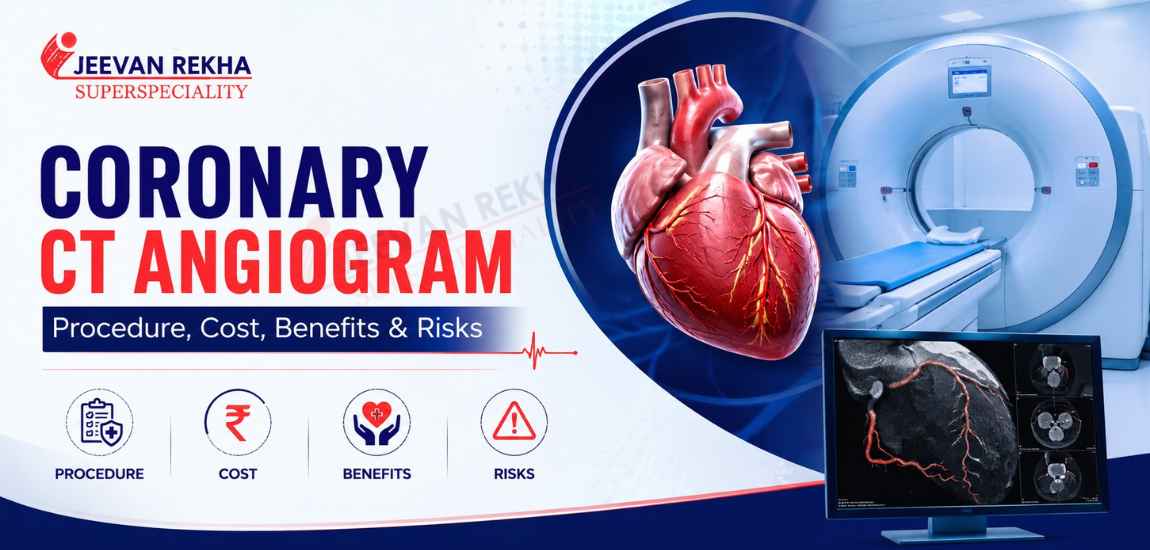
The cost of a coronary CT angiogram is frequently one of the very first questions posed by patients after their doctors recommend the heart imaging procedure. Also referred to as CT coronary angiogram and CCTA, the coronary CT angiogram is a scan that applies the principle of computed tomography and wires in the contrast agent. As a result, it allows locating the plaque, narrowing, or obstruction in the arteries that feed the heart.
A coronary CT angiogram is an advanced test that detects the blood vessels feeding the heart. The procedure contains injecting the contrast medium into the patient’s vein in the arm. The CT scanner is capable of processing images provided that the contrast medium will have moved through the coronary arteries.
If symptoms or prior test results indicate that there may be coronary artery disease, CCTA might be advised by doctors. Those who suffer from chest pain, have ambiguous stress-test results, or have a low to medium chance of having coronary artery disease may be good candidates for CCTA. Department of Cardiology. Moreover, CCTA might be beneficial in finding certain coronary artery abnormalities or past bypass grafts.
The coronary CT angiography process normally involves the following steps:
Step 1: Preparation: At this stage, your doctors will collect information about your past medical history, medications you use, any personal allergic reactions, the state of your kidneys, and the existence of pregnancy.
Step 2: Heart rate preparation: If necessary, you will be treated with medications that will ensure a slower functioning of your heart.
Step 3: Inserting a catheter: A catheter will be introduced to the vein of your arm.
Step 4: ECG monitoring: Small electrodes will be placed on your thorax. This is necessary for synchronizing the CT images with the functioning of your heart.
Step 5: Administration of contrast material: The contrast material will be injected into your vein.
Step 6: CT scan: You will be required to lie motionless on the scanning bed.
Step 7: Reading of images: The output will be interpreted by a radiologist who will issue the conclusion.
You can read also:- Paralysis Attack: Causes, Symptoms, Emergency Treatment And Recovery Tips
The benefits of coronary CT angiography include:
However, CCTA is strictly a diagnostic method. If an important blockage is found, it cannot be treated afterwards using the same scan.
Different location, hospital or device, technology type, contrast materials utilized, and other factors may cause variation in the cost of a coronary CT angiogram. Reports indicate that in India, the average cost of CT coronary angiogram is between ₹8,000 and ₹25,000, while the actual amount charged is subject to significant variations. For instance, according to one of the recent reports from Jaipur, the estimated cost of CT angiography is close to ₹9,450, while some reports say that the estimated cost of the same procedure may be as much as ₹10,000 to ₹25,000.
It is necessary to check the final bill with a certain hospital or diagnostic center prior to going into a test.
There are many reasons why the final price may vary:
CT coronary angiography is safe but not without some risks. There is a very slight chance that the iodine-based contrast material may produce an allergy in someone allergic to it. If someone already has decreased kidney function, the contrast may possibly further reduce it. Hence, the physician may suggest performing some kidney function tests beforehand.
Since CT uses X-rays, there is exposure to radiation, although the dose differs about the type of machine used. However, the modern CT machines involve the use of techniques to reduce the radiation dose. It is important to inform the doctor about a possible pregnancy, if the patient has kidney disease, thyroid problems, diabetes, or reaction to contrast materials.
You can read also:- Atypical Chest Pain: Causes, Symptoms, Diagnosis and Treatment Guide
The arteries mentioned in the report can either be normal or can have the presence of some degree of plaque, narrowing, calcification, and blockages. The significance of the report is based on factors such as the location of the narrowing and the degree of narrowing. In interpreting the report, it is better to consider the patient's symptoms, medical history, ECG tests, blood tests, and any other investigations.
The main difference is that CCTA does not involve surgery while conventional coronary angiography implies passing a catheter through the blood vessels leading to the heart. The standout benefit of traditional angiography is its ability to obtain diagnostic imagery and, if necessary, provide proper intervention in the same procedure form of angioplasty or stenting. On the other hand, CCTA cannot treat patients.
When you finish the examination, you may be observed for a short while after the order was performed, especially with the use of a medication to control your heart rate. Since coronary CT angiography is a non-invasive procedure, there is not much recovery time involved. Most likely, you would be released from the clinic after the procedure but you should know whatever instructions your doctor may give you concerning your fluid intake.
A coronary CT angiogram is an effective option to obtain valuable information about the condition of the heart blood vessels without putting a patient through the invasive procedure of catheterization. Knowledge about the coronary CT angiogram price, preparation, pros, and cons of the procedure will help to relieve the nervousness related to the procedure.
If you experience persistent discomfort in your chest, shortness of breath, or any other signs of heart problems, consult with your physician.
Jeevan Rekha Super Speciality Hospital provides one of the best cardiology services in Jaipir, as well as cardiac diagnostic services, which include ECG, Holter monitoring, echocardiogram, and other services.
A qualified cardiologist would help you with the choice of the right procedure for performing tests and treating your condition based on your symptoms.
Q.1. Is the Coronary CT Angiography procedure painful?
Ans. When it comes to the scan itself, it doesn't hurt. There may be a small amount of discomfort at the time of the IV insertion. You might also experience a mild warm sensation after the injection of the contrast dye.
Q.2. What is the duration of the test?
Ans. The actual CT scan itself usually takes a short time to complete. However, before the scanning process, various activities take place that can take several hours.
Q.3. Will you be required to fast in advance so that you can undergo the procedure?
Ans. In certain cases, you might be required to avoid eating and drinking for a number of hours prior to the procedure. Nevertheless, preparation will vary from one person to another.
Q.4. How effective is the Coronary CT Angiography?
Ans. CCTA is a non-invasive method of diagnostics of coronary artery diseases that can obtain images of the coronaries. However, the images received may be corrupted because of arrhythmias or calcifications.
Q.5. Is it possible to find blockages in the heart using Coronary CT Angiography?
Ans. Yes. CCTA can find out whether there is narrowing of arteries and plaques іn koronary arteries, which can help to get diagnosed properly.

Jeevan Rekha Critical Care and Trauma Hospital, a unit of DR M. N. Tandon Memorial Charitable Trust is located in Jagatpura, Jaipur. The development of the institute reflects our commitment to filling the large gap that exists between demand and availability of Emergency and Critical Care Services in Rajasthan state in general and Jaipur in particular. Through continuous training and research, we aim to make difference to the outcome in these critically sick patients.
⚠️ Disclaimer: The information on the Web Site is provided for informational purposes only and is not meant to substitute the advice provided by our doctor or other health care professional. You should not use the information available on or through the Web Site for treating a health problem or disease or prescribing any medication. All images used on this website are for illustrative purposes only,
2026 © All Rights Reserved.