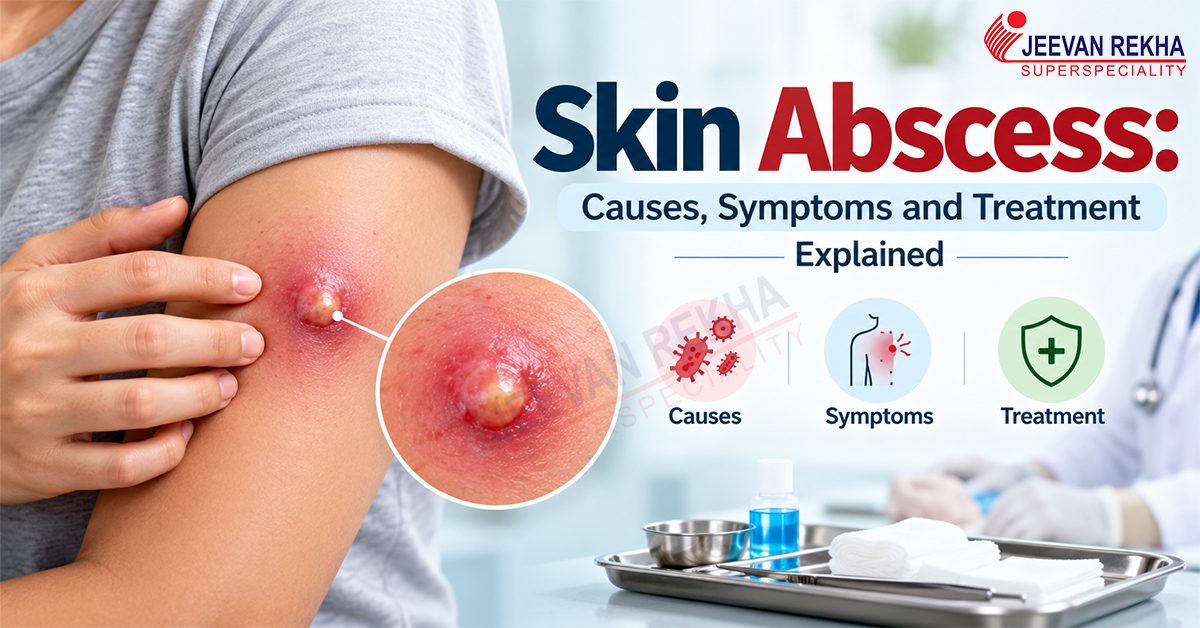
A skin abscess is an irritating swollen lump that forms when pus builds up under the skin due to infection. It typically arises when germs enter the body through injury of some sort such as cuts, scratches, insect bites or through a damaged hair follicle. The immune system kicks in, to produce white blood cells that combine with the bacteria and damaged body tissue leading to the formation of pus.
A skin abscess can develop from any part of the body like the neck, the face, armpits, buttocks, back or legs. Initially, it might look like a simple pimple or a red bump but then continue to increase in size as well as warmth and pain. Consulting a best dermatology hospital can help ensure proper diagnosis and appropriate treatment.
Unlike some minor skin infections, an abscess needs a medical procedure for removing the pus before it spreads.
Skin abscess is primarily caused by certain bacteria. The most important one is Staphylococcus aureus. However, there are more factors that may contribute to the development of abscesses on the skin. The most common causes of skin abscess may include:
The symptoms of skin abscess may differ from one patient to another based on the size, place of location, and the severity of the disease. In some cases, abscesses are small while in others they become big and painful.
Common symptoms include the following:
In some cases, the abscess may have a white or yellow head. However, not all abscesses are developed in such a manner and deep abscesses may sometimes not be seen at all. If redness is seen to develop rapidly, pain increases and if fever shows up, getting medical assistance becomes essential, since the infection may be spreading quickly.
You Can Also Read:- Cyanotic Congenital Heart Disease (CCHD): Causes, Symptoms, Types & Treatment
A skin abscess can frequently be diagnosed by a doctor who inspects the area and asks about the symptoms along with their duration and medical history. During the examination, the physician analyzes the lump for factors such as swelling, tenderness, heat and pus. If the abscess is of great depth, size or difficulty in the assessment, it might be prudent to take an ultrasound to evaluate the size and location.
In some situations, a pus sample may be compulsorily sent for testing in the laboratory to determine the bacteria that cause the infection leading to effective treatment of the patient by providing antibiotics whenever necessary.
In case of patients suffering from repeated abscesses, diabetes or other immunity issues, it may be required to conduct the examination to check for other causes leading to abscess formation.
Determining appropriate treatment for a skin abscess requires consideration of the size, location, and seriousness of the abscess.
1. Incision and drainage
2. Antibiotics
Antibiotics are proper in case the infection becomes more severe, is accompanied by other symptoms such as fever, etc. Occasionally, the doctor prescribes antibiotics to a patient suffering from chronic diseases. Yet, antibiotics alone are not enough in cases when it is necessary to drain the abscess.
3. Warm Apply Compress
4. Injury Care
After the procedure, the impacted area must be stayed clean and the instructions of the physician followed. Prior to handling the injury, one should rinse hands and avoid sharing towels for proper disposing of bandages.
You Can Also Read:- What Is Eagle Syndrome? Symptoms, Causes and Treatment Explained
While some minor skin infections may heal through self-care, it is crucial to get a painful or expanding abscess checked by a doctor. Visit the physician if any of the following happens:
The wound continues leaking or is healing poorly.
A skin abscess is a frequent infection that occurs when there is accumulation of pus against the underlying skin. Recognizing the early indications, the possible causes, and immediate treatment may assist in preventing any complications and ensure healing. Although heat pack can provide relief with some smaller abscess, medical assistance and antibiotics are also important in certain cases as per the infection.
If you see an uncomfortable lump on the surface, swollen area, or any symptoms of infection, see the doctor instead of trying to heal the abscess yourself. Jeevan Rekha Hospital in Jaipur offers healthcare services that can help you to assess and treat your skin infection. Consult the relevant doctor or department for diagnosis and treatment of your condition.
1. What is the definition of skin abscess and its causes?
Skin abscess occurs due to pus being formed beneath the skin as a result of the initial entry of bacteria into the blood. The bacteria can penetrate the blood through wounds such as the skin surface, broken hair follicles resulting in pain and inflammation due to the instant destruction of the intact skin.
2. What are the most common signs of skin abscess?
Signs of skin abscess include painful lumps, pus, tenderness, swelling, and warmth in a specific part of the skin where the abscess forms. The situation can sometimes become severe resulting in fevers and chills related to inflammation in the skin area.
3. Can skin abscess heal naturally?
In certain cases, abscess can heal resulting in spontaneous drainage of pus but in most cases medical assistance in draining it is needed to bring back the person’s health state to normal.
4. What is the result of a skin abscess bursting by itself?
In the event the abscess bursts, the pus could drain out, and the pressure may fall. Use antiseptic to clean the spot, put a fresh bandage, and wash your hands very carefully. Don’t try to push out the pus that is left behind. Always consult a doctor if you experience any of the following symptoms: pain, swelling, redness, high temperature.
5. How long does it take for a skin abscess to heal?
In case of small abscesses, the healing may take several days after proper treatment, whereas the healing period in case of bigger abscesses may last from several days to weeks. The end recovery time depends on the intensity of the damage caused by the infection and further medical help.

Jeevan Rekha Critical Care and Trauma Hospital, a unit of DR M. N. Tandon Memorial Charitable Trust is located in Jagatpura, Jaipur. The development of the institute reflects our commitment to filling the large gap that exists between demand and availability of Emergency and Critical Care Services in Rajasthan state in general and Jaipur in particular. Through continuous training and research, we aim to make difference to the outcome in these critically sick patients.
⚠️ Disclaimer: The information on the Web Site is provided for informational purposes only and is not meant to substitute the advice provided by our doctor or other health care professional. You should not use the information available on or through the Web Site for treating a health problem or disease or prescribing any medication. All images used on this website are for illustrative purposes only,
2026 © All Rights Reserved.