When suffering from severe back pain, one may think that long work hours, poor posture, or lack of physical activity are responsible. However, when the pain begins to radiate down the legs, become numb or make it hard to move, the problem may include nerve compression of the spine. There are a number of patients who can be treated by medication and physiotherapy, but eventually some require a surgery.
For some spinal diseases, endoscopic spine surgery in Jaipur presents a minimally invasive alternative. A tiny camera along with specific tools are being applied to treat the affected area using a small incision, that results in less muscle harm and faster recovery compared to open surgery.
Nevertheless, endoscopic surgery is not good for every spinal disease. Knowing who can benefit from it, what advantages it has, should help patients with making their choice.
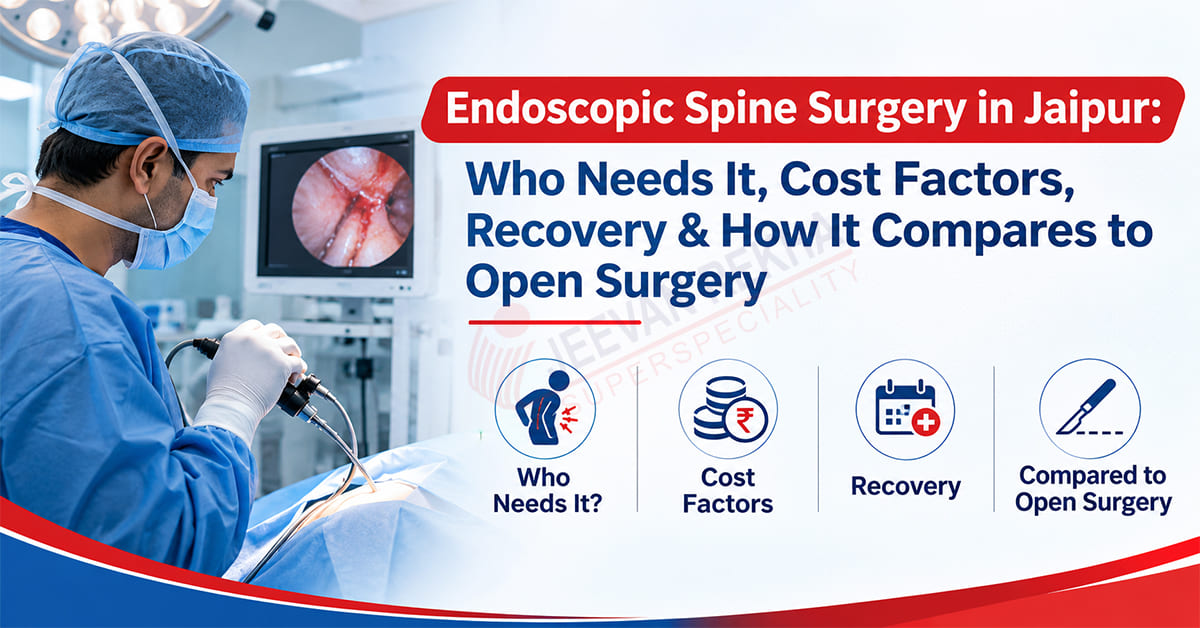
Endoscopic spine surgery is a minimally invasive approach to treat conditions affecting the spine or nearby nerves. The doctor begins the procedure by making a small incision through which a tube with a camera called an endoscope is inserted.
With the help of the camera, the physician is able to obtain a magnified image of the required area on the computer monitor. Special instruments are used to remove the material that obstructs the nerve.
Depending on the particular diagnosis, the process may consist of the excision of part of the herniated disc, bone or a thickened ligament. The difference between endoscopy and conventional surgery consists in the fact that whereas the latter requires a bigger incision and more access to different spine structures, endoscopic treatment is performed via a narrower working channel.
You Can Also Read :- Diabetic Foot Ulcer: Early Warning Signs, Treatment Options & How to Prevent Amputation
Not every patient suffering from back pain needs to undergo a surgical procedure. It is often recommended that an individual seek treatment through medication, physical therapy, change of lifestyle and other non-invasive therapies.
A doctor specializing in spinal surgeries may decide to carry out an endoscopic surgery when the patient continues to experience symptoms even after undergoing proper treatment, or in case the nerve compression is so severe that the patient could not perform his/her daily duties.
The following conditions can be treated:
Herniated Disc: When a soft center of a spinal disc is forced through its covering causing back pain, leg pain or numbness.
Sciatica: Irritation of the sciatic nerve which may cause pain traveling from the lower back through the buttocks and leg.
Lumbar Spinal Stenosis: A narrowing of the spinal canal or nerve exits that provides pressure on nerves resulting in pain, weakness or difficulty walking.
Foraminal Stenosis: Narrowing of the exits from which spinal nerves exit may provide soreness, tingling or numbness.
Chronic nerve compression. Patients suffering from such symptoms and experiencing a nerve compression confirmed by medical imaging may be eligible for surgical intervention.
Experiencing back pain isn't reason enough to insist on surgery. Generally speaking, surgery is only considered after the injury has been evaluated by a medical expert and non-surgical approaches have failed.
You should see a back expert if you notice the following signs:
Chronic back pain that does not go away with treatment.
Pain that radiates down arms and legs.
Numbness or tingling that persists.
Weakness in the legs, which interferes with normal activities.
Problems with walking or holding your position for long periods.
If you notice sudden loss of bladder control or numbness in the groin or quickly worsening weakness in your legs, see a doctor immediately – this indicates a more serious issue that requires emergency medical care .
Both endoscopic and open spine surgeries are employed to alleviate compression of spine nerves and relieve pain. The main distinction lies in how the two procedures are carried out. While endoscopic surgery involves the making of a small incision and causes minimal muscle injury, the open surgical technique utilizes a bigger incision through which more muscle may require dissection.
The endoscopic technique also leads to lesser blood loss, shorter hospitalization period and quicker recovery in comparison to open surgery, which, nonetheless, implies longer periods of recovery but may fit complex spinal diseases requiring more interventions. Therefore, the selection of the appropriate surgical technique is determined by the specific medical case, the spinal anatomy of the patient and recommendations from the surgeon.
Although endoscopic surgery is beneficial in terms of tissue preservation and reduction of time needed for recovery, open surgery has maintained its significance for patients, who need treatment of painful conditions that require high degree of decompression of nerves, correction of deformities and reconstruction of the spine.
Deploying either of the techniques is contingent upon the particular condition of the patient and spinal anatomy rather than incision size.
You Can Also Read :- Why Are My Gums Bleeding? Common Causes, Symptoms and Treatment
The cost of endoscopic spine surgery may differ from one patient to another. The procedure does not have a set price, since it will depend on the severity of spinal disease and treatment provided.
Here are some important factors contributing to the cost:
Patients are advised to ask for a detailed price calculation of the consultation, investigations, operation, accommodation, and medication before getting treated.
Recovery is contingent upon factors such as procedure type, nerve compression extent, and overall condition of the patient.
In most cases, patients are invariably assisted to start walking on that day or the day after, depending on their condition and doctor's recommendation. Recovery timeline is as follows:
1-24 hours: Monitoring, effective pain management and slow initiation of movements.
Week 1-2: Dressing and short walks complemented by lack of intense activity.
Weeks 2-4: Movement and participation in minimal daily routines gradually return.
Weeks 4-6: Some individuals may start doing desk jobs when allowed to recover.
After 6 weeks: Lifestyle can improve gradually with the doctor's approval.
However, heavy loading, exercising and prolonged sitting must be avoided until doctor approves them.
In spite of being minimally invasive, endoscopic spine surgery is a surgical procedure that involves certain risks.
The risks include, among other things, the possibility of infection, bleeding, nerve damage, dural tears, unsuccessful resection of the compressive tissue and recurrence of the herniated intervertebral disc. Furthermore, some patients may experience pain after the surgery.
Although minimally invasive, the technique cannot be used in all cases. For instance, it is not applicable in the case of significant spinal instability, major deformities and other neurospinal pathologies necessitating complex reconstruction.
Patients should discuss the scope of the operation and the expected outcomes with their doctor before giving consent.
Ongoing back pain, numbness in the legs and difficulty in walking are symptoms not to be neglected. Getting an early checkup can help diagnose the underlying spinal condition and decide on the right solution, be it drugs or surgery. At Jeevan Rekha Super Speciality Hospital (JRSH), it is possible to get the opinion of a specialist about spinal conditions and decide on the right treatment option. Endoscopic Spine Surgery in Jaipur should be taken into account if you have consulted a spine doctor.
1. Is endoscopic spine surgery superior to open surgery?
Patients undergoing endoscopic spine surgery may benefit from smaller insicions, less muscle disturbance and a faster recovery process than patients undergoing open surgery. In certain cases though, open surgery may be a better fit for complicated spinal cases. However, the choice between the two method is determined by the reason for surgery and the condition of the nerve.
2. Recovery time after endoscopic spine surgery?
After this type of surgery, many of the patients are walking already after 24 hours. Light exercise can be begun in some future weeks, while work may take a bit more time. The recovery time depends on several factors, for instance, type of the procedure, health condition, and the adherence to post-operative recommendations.
3. Who cannot undergo endoscopic spine surgery?
Patients with major instability of the spine, serious deformity, and other severe spinal conditions may require other forms of surgery. Other factors that affect viability of the procedure are past surgeries and location of compression.
4. Is endoscopic spine surgery painful?
Through the application of anaesthesia, the patients are not subject to any surgical pain during the operation. However, slight soreness or discomfort might be felt afterwards. Taking medication and proper follow-up can help in easing discomfort experienced during recovery.
5. What is the cost of endoscopic spine surgery in Jaipur?
The total cost depends on the kind of spinal condition, the number of levels treated, the cost of the surgeon, the facilities of the hospital, the cost of the anaesthesia used and the duration of stay. It is better to contact the hospital to get a customised quotation after the consultation instead of relying on an arbitrary online estimate.

Jeevan Rekha Critical Care and Trauma Hospital, a unit of DR M. N. Tandon Memorial Charitable Trust is located in Jagatpura, Jaipur. The development of the institute reflects our commitment to filling the large gap that exists between demand and availability of Emergency and Critical Care Services in Rajasthan state in general and Jaipur in particular. Through continuous training and research, we aim to make difference to the outcome in these critically sick patients.
⚠️ Disclaimer: The information on the Web Site is provided for informational purposes only and is not meant to substitute the advice provided by our doctor or other health care professional. You should not use the information available on or through the Web Site for treating a health problem or disease or prescribing any medication. All images used on this website are for illustrative purposes only,
2026 © All Rights Reserved.