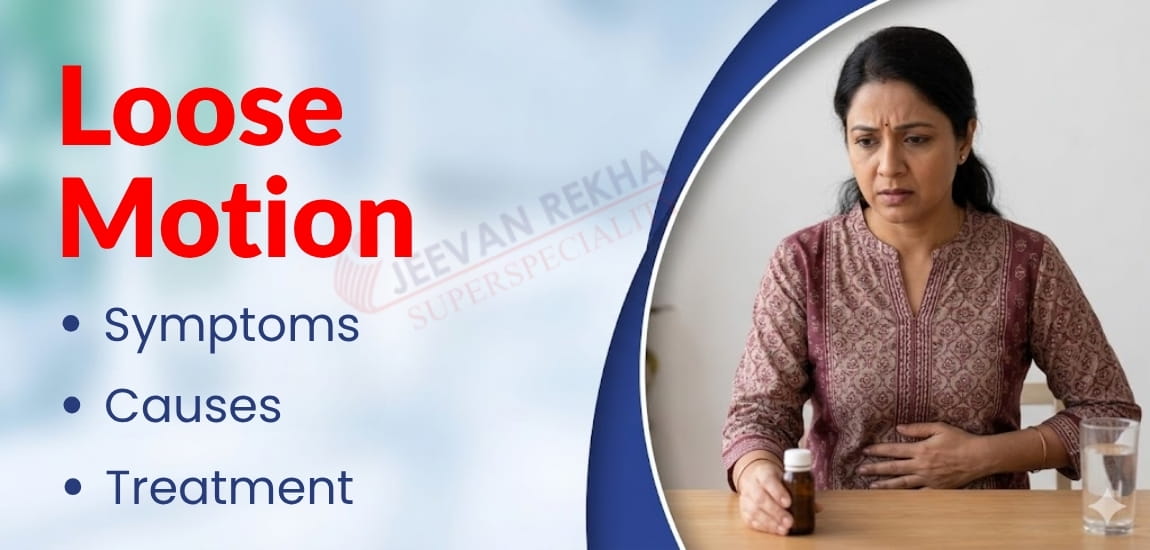
The term "loose motion" includes several different bowel movements that are both frequent and watery. People of all ages can experience loose motions or diarrhea as one of the most common digestive health issues.
Not all instances of loose motion need treatment; however, when an individual has a persistent and/or severe case of loose motion, they are at risk for developing dehydration and/or weakness, and therefore, require medical attention as soon as possible.
Loose motions can occur due to a lack of proper hydration or from infection with an infectious agent in the intestines. Consequently, it is necessary to know the general signs and symptoms of loose motions, the most common reasons why people develop loose motions, and the appropriate ways to treat them in order to provide effective treatment and prevent any further complications from occurring.
The phrase "loose motion" refers to the regular occurrence of sudden movements in the toilet due to digestive problems. However, loose motion can also occur with other signs indicating that the person has problems with their digestive system.
If dehydration leads to problems, people can become dehydrated. The signs of dehydration are:
You can also read :- Leg Pain at Night: Causes, Symptoms & Effective Relief Tips
Knowing the causes of loose motion will help with treatment and to prevent the occurrence of loose motion. Loose mucous stool caused by infectious agents is very common. The Department of Gastroenterology Infectious agents cause most cases of loose stool. There is generally three sources of infectious agents: (bacteria, virus, and parasites) and the usual way an individual gets an infectious agent is through ingestion of contaminated food or water (gastroenteritis).
Loose motion treatment objectives are as follows: relieve symptoms, replace fluids, and treat the cause of loose motion.
Of these, the primary treatment objective is hydration. The following liquids must be consumed abundantly.
A doctor will likely prescribe the following medications:
Self-medicating is not advised unless otherwise directed by a physician.
Resting your body is important for faster recovery.
Certain home remedies may help relieve loose motion:
You can also read :-What Is a Herniated Disc? Causes, Symptoms & Treatment Explained
Diet is very important during the recovery period, as it helps to establish the difference between what should be consumed and what should be avoided.
Here are some recommended foods to eat from the following list:
These types of foods are easily digestible and will help to bind the stool.
Foods to not eat:
Eating light and easily digestible meals will help to speed up the process of recovery for your digestive system.
Prevention is preferable to treatment. Here are some simple, inexpensive and effective ways to do so:
Loose motions are usually mild and may improve on their own within 2–3 days. However, in some cases, diarrhea can indicate a more serious problem and medical attention may be needed.
ou should consult a doctor, preferably a best gastroenterologist, if you experience any of the following:
Loose motion is a common and manageable condition when received proper and timely treatment Attention to loose motion's symptoms, causes, and treatments will allow you to recover quickly and without complication. The three main aspects of a speedy recovery from loose motions is staying hydrated, eating a proper diet and keeping clean.
At Jeevan Rekha Hospital in Jaipur, our goal is to provide you with the care and guidance necessary for you to recover from loose motions and remain healthy in your digestion. If your symptoms persist or worsen, seek professional medical attention immediately. If care is received early, complications may be avoided and a speedy return to normalcy may occur.
Q1.What is the fastest way to stop loose motions?
Ans. Staying well hydrated (drinking Oral Rehydration Salts (ORS), soft foods such as bananas and rice), and taking medicines as prescribed will be the fastest means of stopping loose motions.
Q.2 Will loose motions go away on their own?
Ans. Most cases of mild loose motions usually resolve themselves within 1 - 2 days, and if symptoms persist for longer than normal your healthcare provider may need evaluated.
Q.3 Is it safe to eat food when I have an episode of loose motions?
Ans. It is safe to eat food, however, it is advisable only to eat light and easily digestible foods rather than heavy/spicy foods.

Jeevan Rekha Critical Care and Trauma Hospital, a unit of DR M. N. Tandon Memorial Charitable Trust is located in Jagatpura, Jaipur. The development of the institute reflects our commitment to filling the large gap that exists between demand and availability of Emergency and Critical Care Services in Rajasthan state in general and Jaipur in particular. Through continuous training and research, we aim to make difference to the outcome in these critically sick patients.
⚠️ Disclaimer: The information on the Web Site is provided for informational purposes only and is not meant to substitute the advice provided by our doctor or other health care professional. You should not use the information available on or through the Web Site for treating a health problem or disease or prescribing any medication. All images used on this website are for illustrative purposes only,
2026 © All Rights Reserved.