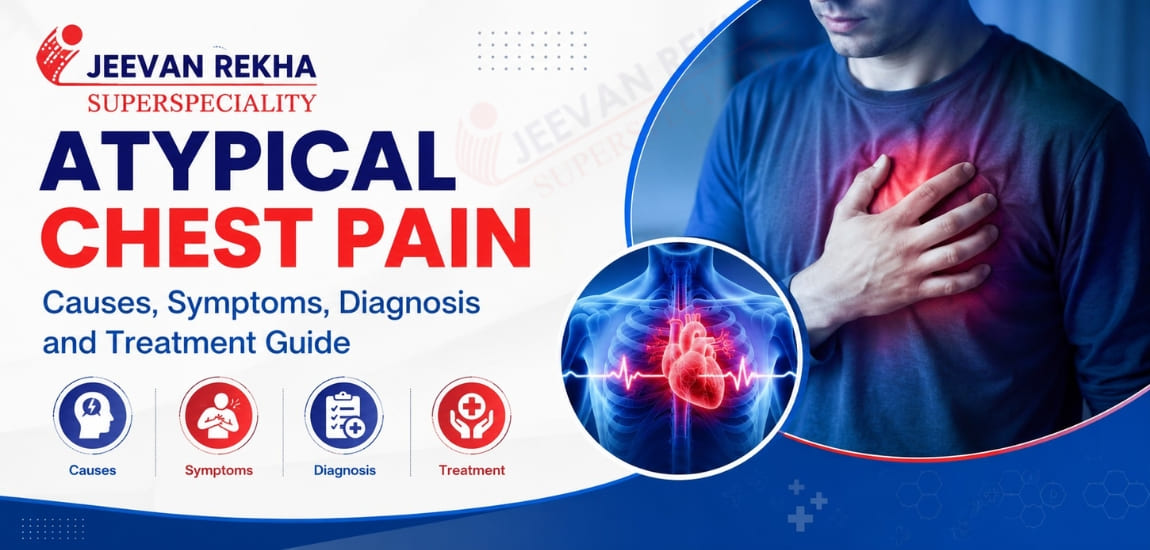
Conversely, atypical chest pain refers to a pattern of pain that is not characteristic of any heart attack. The discomfort experienced by the patient may involve the feeling of a sharp, burning, or stabbing sensation, and it can make itself felt in multiple body regions – in the jaw, neck, shoulders, upper back, or upper abdomen. Although typically linked with muscular, lung or digestive problems, atypical chest pain does include conditions causing heart disease.
Hence, many wonder about the seriousness of uncomplicated chest pain. Yes, it is serious, since although atypical chest pain is often related to diseases unrelated to heart, it must not be ignored, especially if it is of sudden onset and occurs together with various symptoms such as shortness of breath, perspiration, dizziness.
A typical chest pain is different from regular heart chest pain (angina). Instead, the pain may:
It is evident from the combination of atypical chest discomfort and other issues not related to the heart that people in such groups as elderly people, women, and people suffering from diabetes may present complaints concerning the heart in the Cardiology Department without describing any classical symptoms like real chest pain.
The typical causes of atypical chest pain can differ in seriousness and severity of health state.
1. Gastrointestinal Issues
Problems in digestion are one of the most common reasons for unusual pain in the chest. They include:
The pain is commonly described as burning beneath the breastbone that intensifies after the meal and while lying down.
2. Muscle and Bone Issues
Pain caused by the muscles, ribs, and joints is often confused with pains coming from the heart. The leading causes are:
The pain is typically aggravated when moving, twisting, or pressing on the chest.
3. Lung Problems
A number of diseases of the respiratory system can lead to chest pain, such as:
These diseases always appear with cough, fever, and medication problems.
4. Stress and Panic Attack
Stress can cause chest pain that is very similar to heart-related pain. The symptoms may consist of:
Reducing levels of stress can help reduce this effect.
5. Heart-related Problems
Even though it is referred to as atypical, the pain might still be related to the heart.
Causes of possible heart-related problems:
Individuals suffering from diabetes and females may have heart attacks with no typical pain felt in the chest.
Atypical symptoms of chest pain are defined according to the causes of the problem. The common complaints may be:
Many causes of the problem are not fatal, but you should get immediate help if you have chest pain accompanied by:
You can read also:- Leg Cramps at Night: Causes, Symptoms, Relief and Prevention Tips
When evaluating unusual chest pain, the first step for doctors is to determine whether the heart is involved.
The doctor may order the following tests:
Health Profile
Because the doctor will ask about the following:
Health Check
As part of this assessment, the doctor measures and examines the following:
Electrocardiogram
An ECG checks the electric activity of the heart, showing whether:
Blood tests
The results of blood tests will indicate:
Chest X-ray
Results of a chest X-ray helps to determine whether:
Echocardiogram
An echocardiogram allows the doctor to evaluate:
Stress test
A stress test measures how well the heart functions under stress.
CT Scan/Coronary Angiography
It may also be necessary to use advanced imaging techniques to diagnose coronary artery disease.
What causes can lead to chest pain is the reason behind its treatment. In case acid reflux results in chest pain, medication used is:
As far as muscle pain is concerned, the next treatment will include:
As far as anxiety is concerned, the possible treatments are:
Based on the lung disorder, the treatment will most probably contain:
As far as heart related issues are concerned, treatment can include:
You can read also:- Burning Stomach: Causes, Symptoms, Relief and Treatment
Preventive methods differ with respect to the reason behind the condition but usually follow the next common guidelines:
Despite the fact that in numerous cases, atypical pains in the chest are connected to problems of the stomach, muscle overstrain, anxiety, and pulmonary diseases, sometimes such pains indicate serious problems of the heart. Considering the fact that the symptoms may vary from a heart attack to a simple pain, it is important to get medical help as soon as possible in case you cannot get rid of the pain for a long time or if it is accompanied with symptoms such as sweating or dizziness.
The Jeevan Rekha Hospital Jaipur has staff of cardiologists who will perform a full examination of patients complaining of the pain in the chest by using different diagnostic methods such as an electrocardiogram, echocardiogram, blood tests, stress test, etc.
Q.1. What does atypical chest pain refer to?
Ans. Atypical chest pain refers to the discomfort occurring in chest that does not have the usual features present in heart-related chest pain. It can be sharp, burning, stabbing or arise from jaw, neck, back or upper abdomen, and not just from the center of the chest.
Q.2. What are the usual reasons for experiencing atypical chest pain?
Ans. The usual reasons for experiencing atypical chest pain include acid reflux, gastritis, muscle strains, anxiety, panic attacks, lung infection, inflammation in the chest wall and in some cases heart disease like angina or a heart attack.
Q.3. In what way is atypical chest pain different from heart attack pain?
Ans. In most instances heart attack pain causes pressure or tightness in the center of the chest. In contrast, atypical chest pain can be sharp or burning or can arise from some other unusual areas. However, some heart attacks that occur in women, older individuals and diabetic people can have atypical symptoms.
Q.4. When is it advisable to visit a doctor for unusual chest pain?
Ans. It is important to get medical help for severe chest pain, pain that lasts for several minutes, pain radiating to the jaws or arms, and experiences difficulty breathing, sweating, fainting, or feeling weak.
Q.5. Does stress cause unusual chest pain?
Ans.Yes. Unusual chest pain can be caused by over-acidity, gastritis, and stress-induced panic attacks.

Jeevan Rekha Critical Care and Trauma Hospital, a unit of DR M. N. Tandon Memorial Charitable Trust is located in Jagatpura, Jaipur. The development of the institute reflects our commitment to filling the large gap that exists between demand and availability of Emergency and Critical Care Services in Rajasthan state in general and Jaipur in particular. Through continuous training and research, we aim to make difference to the outcome in these critically sick patients.
⚠️ Disclaimer: The information on the Web Site is provided for informational purposes only and is not meant to substitute the advice provided by our doctor or other health care professional. You should not use the information available on or through the Web Site for treating a health problem or disease or prescribing any medication. All images used on this website are for illustrative purposes only,
2026 © All Rights Reserved.