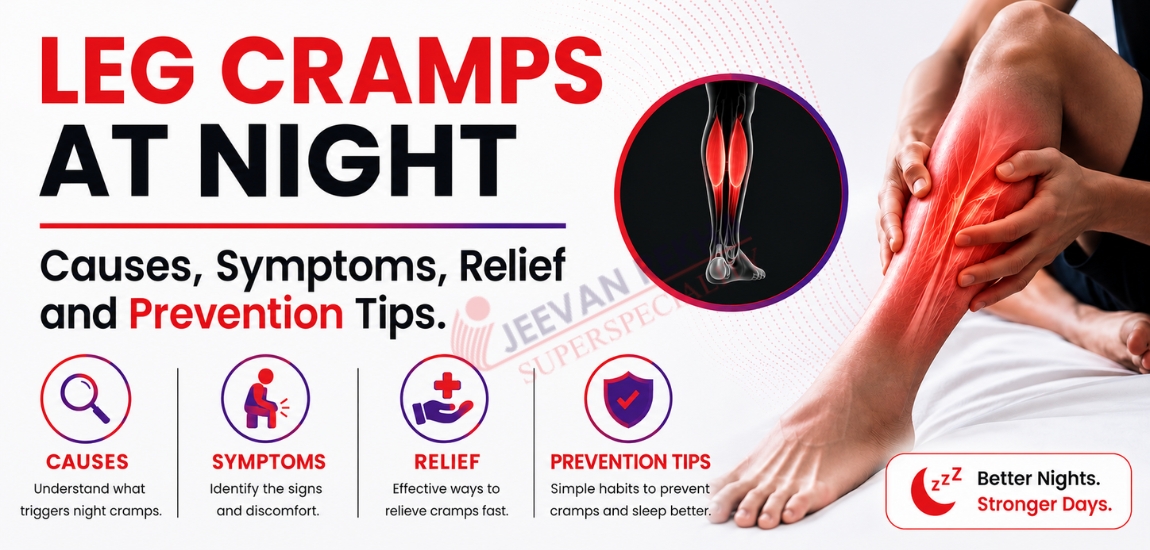
Nocturnal Leg Cramps (Leg Cramps at Night) are a common source of discomfort during the night that may interrupt your sleep and have a significant impact on your quality of life. Leg cramps occur suddenly and can be very painful, caused by an involuntary contraction of the calf, foot, or thigh muscles while you are asleep or resting. Occasional leg cramps are normal; however, frequent leg cramps can indicate other possible issues such as dehydration, fatigue, poor circulation, nerve issues, etc., or other medical problems.
If you have frequent leg cramps at night, knowing what causes them, what symptoms to look for, and what treatments are available will allow you to better manage this condition and improve your quality of life.
Nocturnal leg cramps (Leg Cramps at Night) are a sudden and uncontrolled contraction of muscles, generally occurring in the calf muscle; however, these contractions can also occur in the feet or the thighs. Nocturnal leg cramps typically last anywhere from a few seconds to several minutes; however, the affected muscle may remain sore for several hours following the occurrence of the cramp.
Unlike the desire to move your legs associated with Restless Leg Syndrome, you will be experiencing intense pain associated with nocturnal cramps, which occur as a result of the sudden tightening of your muscles. For proper muscle cramp diagnosis, the best orthopedic hospital in Jaipur can help with the right treatment guidance.
Calves usually cramp during sleep and experience 70% or more of nighttime muscle type leg cramps, though other muscles can cramp at night as well.
Typical symptoms include:
You can read also:- Burning Stomach: Causes, Symptoms, Relief and Treatment
"I wonder why I get leg cramps when I sleep." And sometimes there is no clear answer to the question, but there are many reasons for increased chances of getting leg cramps during the night.
1. Muscle Fatigue:
If you have overused your muscles while exercising or been standing up for a long enough amount of time, then you may get cramps at night.
2. Dehydration:
If you don't drink enough water, you can have a decrease in normal muscle function, which causes an increased likelihood of cramping.
3. Electrolyte Imbalance:
If you are lacking in potassium or magnesium or calcium, these minerals affect how your muscles contract and may contribute to having muscle contractions when you are sleeping.
4. Poor Blood Circulation:
Reduced blood flow to your legs can cause your muscles to be in pain and also produce muscle cramps.
5. Sitting or Standing for Long Periods of Time:
Staying in one position for a long period of time puts stress on your muscles.
6. Pregnancy:
Women who are pregnant are more likely to experience leg cramps during the second and third trimesters of their pregnancies.
7. Aging:
With aging, we naturally lose muscle, and we also become less flexible, thus increasing the chances of getting leg cramps at night as we age.
8. Medical Conditions:
Leg cramps during the night may be related to having one or more of the following medical conditions: diabetes; kidney disease; liver disease; peripheral artery disease; thyroid disorders; or nerve disorders.
10. Some Medications:
Certain medications may contribute towards having leg cramps during the night when you are sleeping. Some examples of some medications are diuretics; statins (cholesterol lowering); blood pressure medications; and some medications used for asthma.
Most cramps will no longer be an issue an hour after doing some self-care to take away muscle spasms.
1. Stretch The Affected Muscle
Put your body in a standing position and straighten the affected leg, flexing the ankle in order to reach to your toes.
2. Massage The Affected Area
A light massage of the area will help with relaxation and help with the flow of blood to that area.
3. Walk It Off
Walking on the affected leg with a very slow pace will cause the spasm to go away.
4. Use Heat
Heat applied in the form of warm towels, heating pads, or warm showers will help in relaxing the muscle.
5. Drink Water
It is important to drink plenty of water throughout the day, and also before, during and after exercise.
Treatment for muscle cramps will depend on what is causing them, and may include:
Any person who experiences almost any muscle cramping will probably not need to visit their physician. If you experience all the following symptoms, you should see your physician:
1. There is a great deal of pain associated with the cramping
2. You are having muscle cramping at night so frequently that it doesn’t go away
3. You feel weak or numb in any way
4. You are having a hard time walking correctly
5. There was an injury that caused your muscle cramping
6. In any way, you are unable to continue your daily activities or are unable to function because of your muscle cramping.
You can read also:- Food Rich Vitamin B12: Benefits, Sources & Daily Intake
These nighttime cramps can be kept at bay by general lifestyle measures.
1. Hydration: Drink plenty of fluids during the day.
2. Exercise: Moderate exercise keeps the muscles in good shape without overstressing them.
3. Wear Supportive Footwear: Supportive shoes help with muscle strain.
4. Eat Foods High in Potassium, Magnesium, and Calcium:
None of these nutrients are available when you don't eat them, so:
5. Don't Sit For Long Periods: If your job requires prolonged sitting, make sure to take frequent breaks to walk around a little or stretch very well.
6. Sleep Comfortably: Sleeping position may not be the most important factor because cramping is likely to occur regardless; however, trainers of athletes recommend that patients not point their toes down when sleeping because it might increase the chance of calf cramps.
Commonly, Leg Cramps at Night can be managed by making minor lifestyle modifications like staying hydrated, stretching and maintaining an active lifestyle; however, recurrent or serious cramps may be symptoms of an underlying medical condition that will require evaluation by a physician.
At Jeevan Rekha Hospital; Jaipur, the knowledgeable Ortho’s; General Medicine physicians and Physiotherapy division will provide a thorough assessment of your muscle cramping, joint pain, circulatory problems and other musculoskeletal issues. If your sleep or daily lifestyle is affected by leg cramps while you sleep please schedule an appointment with one of our qualified physicians for your own personalized care and treatment options.
Q.1. What is the reason my leg cramp at night?
Ans. Your leg can cramp at night due to many reasons including: dehydration, tired muscles, low electrolyte level in your blood (minerals), being pregnant, being older, having poor circulation to the legs, or medical conditions like diabetes or neurological disorders.
Q.2. How do I quickly relieve leg cramp?
Ans. When you have developed a cramped muscle, try: stretching the crippled muscle, massaging it gently, walking very slow, keeping the area warm, drinking plenty of fluids if you're dehydrated. Many times, these will give you relief from your leg cramp immediately after starting them.
Q.3. What are the causes of leg cramps while asleep?
Ans. Leg cramps that come on suddenly while you're asleep are most commonly associated with excessive fatigue in your muscles from activity, dehydration, sitting for long periods, imbalances of minerals in the blood (electrolytes), pregnancy, and poor circulation.
Q.4. What can I use to help prevent having leg cramps during sleep?
Ans. One way to lessen leg cramps while sleeping is to do regular stretches before going to bed, stay well hydrated, exercise moderately throughout the day, eat a healthy and well-balanced diet, and avoid prolonged periods of sitting.
Q.5. What can I do to avoid leg cramps while asleep?
Ans. Leg cramps while sleeping may be prevented by stretching your calf muscles before you lie down, drinking enough water throughout your day, having balanced electrolytes in your body, wearing shoes that provide a good amount of support, and living a healthy lifestyle.

Jeevan Rekha Critical Care and Trauma Hospital, a unit of DR M. N. Tandon Memorial Charitable Trust is located in Jagatpura, Jaipur. The development of the institute reflects our commitment to filling the large gap that exists between demand and availability of Emergency and Critical Care Services in Rajasthan state in general and Jaipur in particular. Through continuous training and research, we aim to make difference to the outcome in these critically sick patients.
⚠️ Disclaimer: The information on the Web Site is provided for informational purposes only and is not meant to substitute the advice provided by our doctor or other health care professional. You should not use the information available on or through the Web Site for treating a health problem or disease or prescribing any medication. All images used on this website are for illustrative purposes only,
2026 © All Rights Reserved.